

What Goes Into Determining The Right Roof For Your Porch Addition?
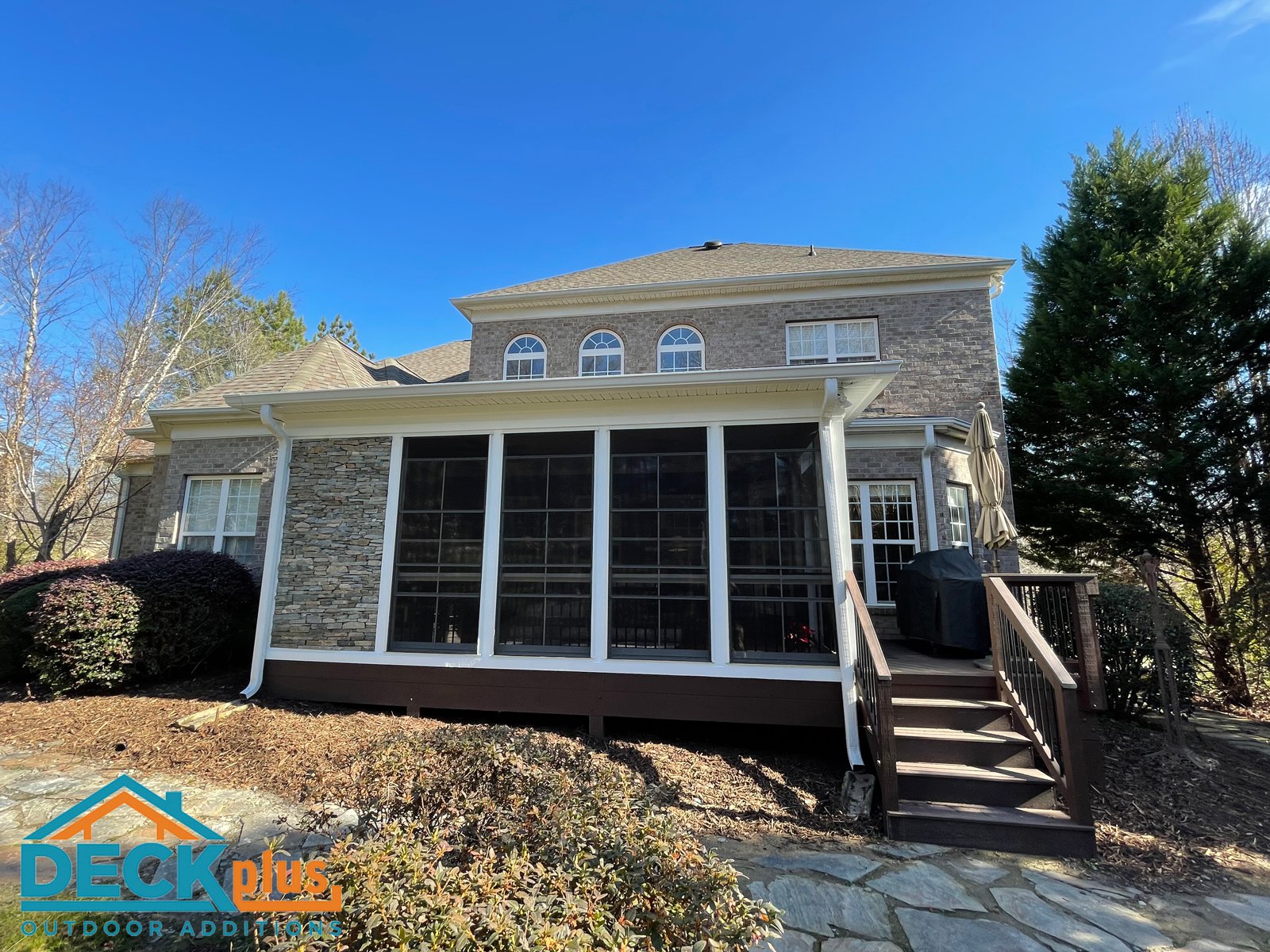
Choosing the right roof for a porch addition comes down to three things: how your home’s rooflines are built, what second-story windows or architectural features limit, and how you want the finished space to feel in terms of light, height, and coverage. In this guide, we break down the most common roof styles, when each one works best, and how tie-ins affect complexity and cost, so you can plan confidently before design begins.
What this guide covers:
- What your home’s roof and window layout can allow
- The most common porch roof styles and how they perform
- A quick side-by-side comparison to narrow your options
- When combining rooflines is the best solution
- How a roof tie-in differs from a sidewall connection
If you are still deciding on the structure itself, start with porch types and layouts so your roof plan matches how you will use the space.
Table of contents
Key Components To Your Porch Roof Design
There are two key components Deck Plus takes into consideration when planning for your roofed structure. One is your back-of-home configuration. This means we consider the roof style that already exists on your home. The second component we consider is any second-story window configuration you may have on your home. Second-story windows can often limit the roof style options. This is because you never want to obstruct the windows in any way, this is why we often suggest a roof style that will accomplish this objective.
If you are weighing enclosure options while planning the roof, compare screened vs 3-season options early, since the structure and roof height can influence comfort and airflow.
In addition to windows, some two-story homes also feature a cantilever in their design. The presence of a cantilever can also prohibit the use of a particular roof style in your porch design. It can also prevent the ability of a tie into your home’s existing roofline as well.
Another factor to consider is if your home’s roof is composed of multiple rooflines. Deck Plus may match the style of your porch roof to an existing roofline present on your home, but not always. Existing roof lines, dormers, windows, cantilevers, skylights and bump-out areas such as bay windows are many factors that go into choosing the right roof style for your new addition.
The Most Common Porch Roof Designs
Here in the south, the most common roof designs are the gable, hip, and shed roof. If you want to see examples across different porch designs, it can help you visualize how each roof style affects light, ceiling height, and overall feel.
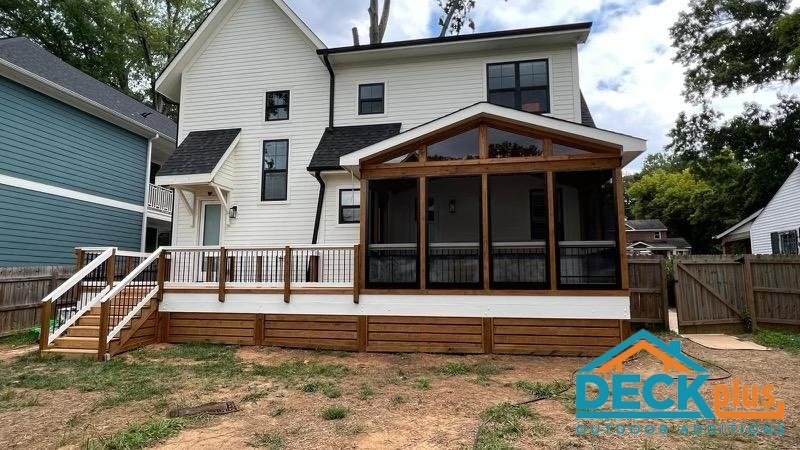
Each of these roof styles has its pros and cons. For example, a gable roof is the most-requested and most popular of the three. This roof style resembles a triangle and is comprised of two sides sloping down from a center line. A good bit of light enters an addition when the gable (or triangle end) is left open. The use of a gable roof overcomes the issue of loss of light that is often a source of concern for homeowners when considering a porch or other roofed outdoor addition. This roof style also creates an open and airy effect and often enables the use of higher, vaulted, or cathedral ceiling heights within the space which naturally allows more natural light to flow within the space, and within the home.

A hip roof is made up of 3 or more sides which all slope downward from a center point. This style roof is essentially comprised of a pyramid shape. A hip roof is often considered the most complex roofline from a construction standpoint. A hip roof may also cost more than a more basic roof shape. This roof style is very popular with both traditional and contemporary homes. Aesthetically pleasing to the eye, especially from the inside its geometric complexity adds more visual interest.

Hip roof.
A shed roof attaches to the house and gently slopes down creating a charming look that also efficiently diverts water in a simple design. The benefit of a shed roof is that it is usually not as complex as a gable or hip roof, and can often be more economical to build.

Quick Comparison: Gable vs Hip vs Shed Roofs
Use this quick comparison to narrow down your options before you get into detailed design. Your final choice still depends on rooflines, windows, and tie-in constraints, but this can help you identify the strongest starting point.
| Roof style | Natural light | Ceiling height | Complexity | Best when |
|---|---|---|---|---|
| Gable | High | High | Medium | You want a bright, open feel and your roofline allows the height. |
| Hip | Medium | Medium | High | You want a more architectural look and your home style supports it. |
| Shed | Medium | Low to medium | Low | Windows, cantilevers, or rooflines limit height, or you need a simpler connection. |
Combining Rooflines
When you imagine roof shapes, you probably automatically envision a gable or hip roof, especially in the Charlotte area as these are the most commonly seen on many local homes. However, the truth is, in some circumstances a gable or hip roof is not a viable option for your new porch addition. A shed roof is often the best choice. The diagrams below that help illustrate the use of a shed roof in conjunction with a gable or hip roof:


Yes, it is okay to mix rooflines for your new porch addition! A shed roof is often less complex and works well with a tie-in to a one-story home needing a lower roof connection. For both one and two-story homes, the presence of architectural elements and windows won’t allow for certain roof styles. Any elements that may cover or cause view obstructions also make great candidates for a shed roof. A shed roof style is a viable option where the situation calls for a porch roof style that will not impede on your home’s existing structural and/or design elements.
The Porch Roof Tie-In
A very important determination when designing and planning for your new porch addition is where to attach the addition to your existing home. This can be achieved through a roof tie-in or a sidewall connection. Additionally, crickets are sometimes necessary when tying rooflines together. A cricket is an angled implement that helps divert water away from the roof of a structure to the ground or into gutters taking it away from the home.
Indeed in most situations, a roof tie-in connection is more costly than a sidewall connection. A roof tie-in requires greater experience and expertise to make the connection structurally sound and watertight. The complexity of determining the best roof tie in another reason for the importance of choosing a seasoned builder, and you can use this builder selection guide to compare experience and process before you commit.
As you can see, choosing the right roof for your outdoor addition is more important than you may think. Porches, screened porches and 3-season porches have become a highly desired feature among Charlotte-area homeowners. Depending on what type of porch you fancy, they may serve as a shady respite from the afternoon sun or provide additional indoor and outdoor living space. The possibilities are truly endless. Trust Deck Plus to design and build a porch for you that will bring enjoyment for many years to come!
Porch Roof FAQs
How do I know if a gable roof will block my second-story windows?
The roof pitch and tie-in height determine whether windows will be impacted. A design review should confirm sightlines and clearances before construction so windows remain functional and unobstructed.
Is a roof tie-in always better than a sidewall connection?
Not always. A roof tie-in can look seamless and may improve water management, but it often costs more and requires more complexity. A sidewall connection can be effective when rooflines or height restrictions make a tie-in less practical.
Which porch roof style gives the most natural light?
A gable roof often provides the brightest feel, especially when the gable end can remain open or be designed to maximize light. Shed and hip roofs can still be bright, but height and slope constraints may reduce overall light compared to a gable.
When is a shed roof the best choice for a porch addition?
Shed roofs are often best when window placement, cantilevers, or complex rooflines limit your height options. They also work well when you need a simpler connection point while still directing water efficiently.
Do I need a cricket where two rooflines meet?
Sometimes. Crickets are used to divert water away from a junction where water could collect, especially near valleys or larger tie-in areas. The need depends on the roof geometry and the water flow path.


Contact Us Today
- Mooresville
- Cornelius
- Huntersville
- Davidson
- Concord
- Charlotte
- Steele Creek
- Waxhaw
- Weddington
- Matthews
- South Park
- Myers Park
- Indian Trail
- Monroe
- Cotswold
- Fort Mill
- Indian Land
- Rock Hill
- Mooresville
- Cornelius
- Huntersville
- Davidson
- Concord
- Steele Creek
- Weddington
- South Park
- Myers Park
- Indian Trail
- Monroe
- Cotswold
- Rock Hill
- Mooresville
- Cornelius
- Huntersville
- Davidson
- Concord
- Charlotte
- Steele Creek
- Waxhaw
- Weddington
- Matthews
- South Park
- Myers Park
- Indian Trail
- Monroe
- Cotswold
- Fort Mill
- Indian Land
- Rock Hill
- Mooresville
- Cornelius
- Huntersville
- Davidson
- Concord
- Steele Creek
- Weddington
- South Park
- Myers Park
- Indian Trail
- Monroe
- Cotswold
- Rock Hill